
Mortgage SEO, AEO and GEO: getting found in Google and AI answers
Mortgage SEO, AEO and GEO explained for loan officers: how to rank in Google, become the extracted answer, and get cited by AI assistants, step by step.
 Marcus OkaforSearch and speed engineer, Mortgage Website ShopPublished · Updated · 5 min read
KEY TAKEAWAYS
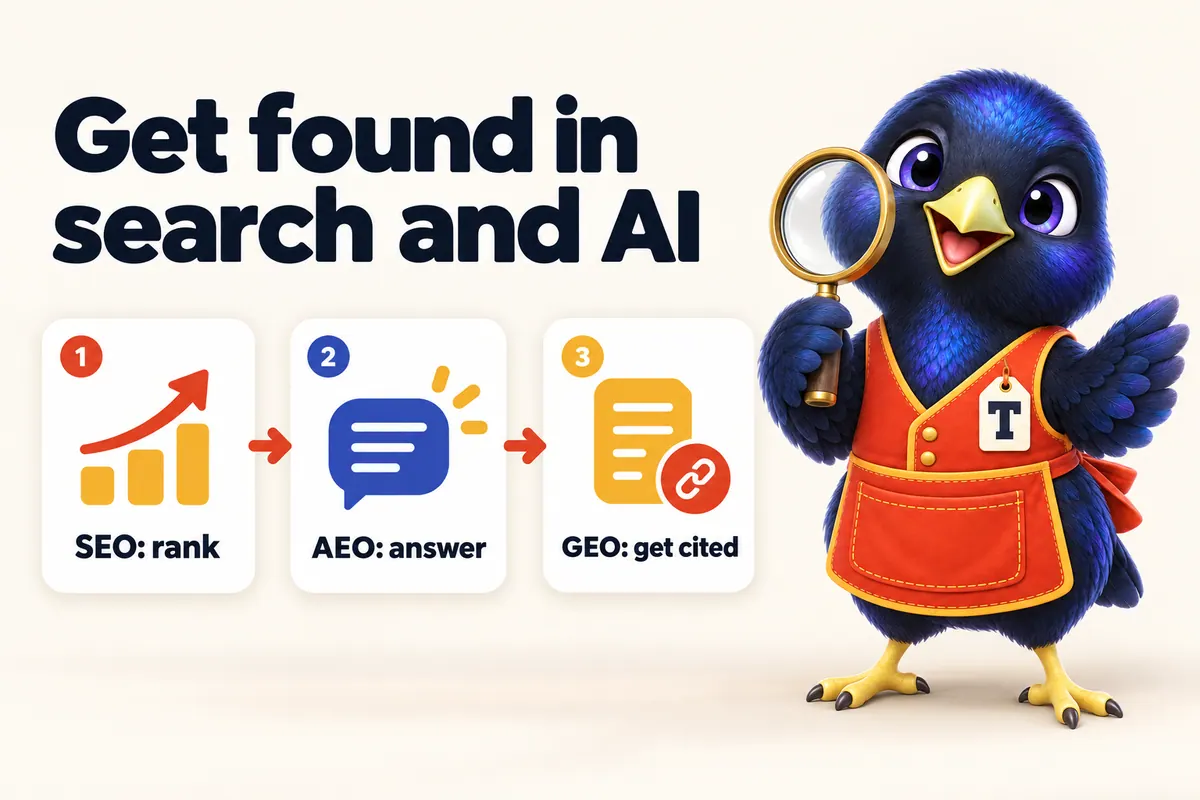
- SEO earns rankings, AEO earns the extracted answer, GEO earns citations in AI assistants; one well-built page can do all three.
- Give every loan program and key question its own page with one primary phrase, so pages never compete.
- Lead each section with a direct 40–60 word answer under a question-shaped heading.
- Publish plain, sourced, dated facts with consistent names, structured data and an llms.txt file, and let AI crawlers read your site.
Mortgage SEO is how borrowers find your site in search results; AEO is how your answer gets lifted into the results themselves; GEO is how AI assistants come to quote you when someone asks which loan program or lender fits them. They are three goals, but one well-structured page can serve all of them.
This guide explains each discipline in plain terms and gives you a practical order of work for a loan officer, broker or branch site.
audiences for every page: search engines, answer features and AI assistants
This guide
about the length of an extractable answer (40–60 is the usual target)
Common AEO practice
first-time buyer share of purchases: the audience asking the most questions
NAR 2025 Profile of Home Buyers and Sellers
What is mortgage SEO?
Mortgage SEO is the work of making your site rank when borrowers search for mortgage topics, programs and local lenders. It has three layers: technical foundations (speed, crawlability, structure, schema), on-page content that answers the question behind each search, and off-page signals such as reviews, citations and links from local partners.
For a loan officer, the most important SEO decision is structural: give every program and key question its own page, each targeting one primary phrase. An FHA page targets FHA questions; a VA page targets VA questions. When two pages target the same phrase, they compete and both lose.
| Search phrase | Intent | Page that owns it |
|---|---|---|
| FHA loan requirements [state] | Informational | FHA loans page |
| [city] mortgage loan officer | Local / commercial | Home page |
| how much house can I afford | Informational | Affordability calculator page |
| VA loan first-time buyer | Informational | VA loans page |
| is refinancing worth it | Commercial | Refinance page with break-even tool |
What is AEO, and how do you write for it?
Answer engine optimisation shapes content so search features and voice assistants can extract a direct answer. The pattern is consistent: a question-shaped heading, then a direct answer of roughly 40 to 60 words, then the detail.
- Question headings that match how borrowers ask: “How much do I need for a down payment?”
- Direct first sentences that answer without preamble.
- Lists for “how to” and “types of” questions.
- Tables with header rows for comparisons.
- Real FAQs specific to the page, marked up with FAQPage schema.
Source: Common AEO practice: 40–60 words
Show the data table
| Measure | Value |
|---|---|
| words (target 40–60) | 50 |
What is GEO, and why does it matter now?
Generative engine optimisation prepares your site to be understood and cited by AI assistants. When someone asks an assistant which loan suits them, it assembles an answer from sources it can parse and trust. The sites it favours state facts plainly, attribute numbers to named sources with dates, use consistent names everywhere, and confirm who they are with structured data.
Practical GEO steps for a mortgage site:
- Allow AI crawlers. If robots.txt blocks GPTBot, ClaudeBot or PerplexityBot, those systems cannot read you.
- Publish llms.txt. A short description of who you are and links to key pages.
- Keep entities consistent. One business name, one way to write your name and NMLS ID, one set of program names.
- State facts with sources. “The 30-year fixed averaged 7.4% (Freddie Mac PMMS, 2026-10-15)” is quotable; “rates are great right now” is not.
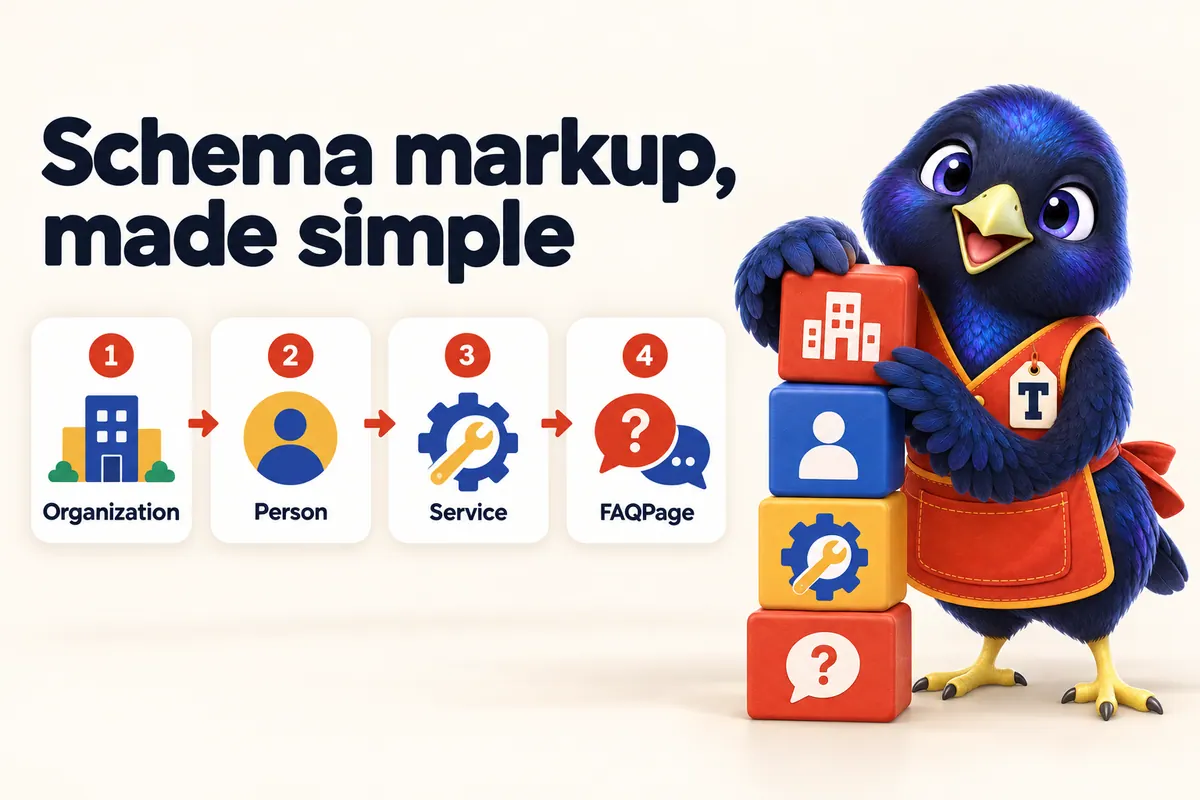
- Mark up who you are. Organization or FinancialService, Person for each loan officer, Service for programs.
How much work goes into each?
The order matters more than the effort. Technical foundations come first because everything else sits on them.
- Technical SEO and schema
- Program pages and AEO structure
- Guides and GEO facts
- Reviews and local signals
Source: Illustrative example of how we sequence work, not a market statistic
Show the data table
| Label | Technical SEO and schema | Program pages and AEO structure | Guides and GEO facts | Reviews and local signals |
|---|---|---|---|---|
| Month 1 | 50% | 40% | 10% | 0% |
| Month 2 | 15% | 35% | 35% | 15% |
| Month 3 | 10% | 20% | 45% | 25% |
How do SEO, AEO and GEO compare?
Three disciplines, one page
SEO
Pros
- Brings clicks from search
- Compounds over time
Cons
- Slow for competitive terms
- Needs technical foundation
Best for: Every site, first
AEO
Pros
- Wins snippets and voice answers
- Mostly a structure change
Cons
- Some answers satisfy without a click
Best for: Question-heavy topics like programs
GEO
Pros
- Gets you quoted by AI assistants
- Rewards clear, sourced facts
Cons
- Hard to measure precisely
- No guarantees of citation
Best for: Sites that want to be the trusted source
A practical 10-step checklist
- One page per program and key question, each with one primary phrase.
- Titles under 60 characters and descriptions under 155, unique on every page.
- Fast static pages with explicit image sizes.
- A sitemap index and clean canonical URLs.
- Question headings with direct answers.
- Eight to twelve page-specific FAQs on important pages.
- Organization, Person, Service, FAQPage and BreadcrumbList schema.
- llms.txt and open AI crawlers.
- Sourced, dated statistics.
- Genuine reviews on your Google Business Profile.
How should a loan officer site be structured for all three?
Structure is the foundation that SEO, AEO and GEO share. A clear structure for a loan officer site looks like this:
- Home page targeting your name, your market and “mortgage loan officer” style searches.
- About page with your story, NMLS ID, licensed states and reviews.
- One page per loan program (conventional, FHA, VA, USDA, jumbo, DSCR, HELOC, reverse), each answering that program’s top questions.
- Calculator pages with explanations, not just the tools.
- A guides section for the questions borrowers ask before they are ready to talk.
- Contact and apply pages with clear next steps.
Each page owns one primary search phrase. Internal links connect them the way a borrower thinks: from a guide to the relevant program, from the program to the calculator, from the calculator to the application.
What does a well-built program page look like?
A program page that works for search, answer features and AI assistants follows a predictable pattern:
- An H1 that names the program and the audience, for example “FHA loans for first-time buyers in Texas”.
- A definition block: a 40–60 word plain-English explanation of what the program is.
- Question headings for the top questions: who qualifies, what you need, pros and trade-offs, how long it takes.
- Direct answers first under each heading, then detail.
- A comparison table with a related program.
- Eight to twelve page-specific FAQs, marked up with FAQPage schema.
- A next step: calculator, short quiz or application.
- Sources and dates for any statistics.
How do local signals fit in?
For loan officers, local relevance matters as much as content. Make sure your name, company, service area and contact details are identical everywhere they appear: your site, your Google Business Profile, your company’s LO directory, NMLS Consumer Access and any industry directories. Ask every closed borrower for a review on the profiles that matter to you. Mention the communities you serve naturally in your content, without creating thin city pages that only swap the place name.
How do you measure progress?
Measure each discipline with the tools that exist rather than guesses:
- SEO: impressions, clicks and average position in Google Search Console, by page and query.
- AEO: which queries show your pages in rich results and People Also Ask, also visible in Search Console.
- GEO: referral visits from AI assistants in your analytics, and periodic manual checks of how assistants describe your programs and market.
Review monthly, compare quarters, and expect slow, compounding progress rather than overnight jumps.
Common mistakes
- Publishing one long “services” page instead of a page per program.
- Writing for keywords instead of questions, so answers are buried.
- Copy-pasting the same FAQ block on every page.
- Blocking AI crawlers by accident with an overly strict robots.txt.
- Using different spellings of your name or company across the web.
- Adding schema that describes content not visible on the page.
- Quoting statistics without a source or date.
The bottom line
You do not need three strategies. You need one site built carefully: clear structure, answer-first writing, honest sourced facts, consistent names, schema and speed. Do that, keep publishing useful answers, and search engines, answer features and AI assistants all have a reason to send borrowers your way. See how the pieces fit on our SEO, AEO, GEO and schema pages.
Frequently asked questions
What is the difference between SEO, AEO and GEO?
SEO (search engine optimisation) helps pages rank in search results. AEO (answer engine optimisation) helps a page become the answer shown in snippets, People Also Ask or voice results. GEO (generative engine optimisation) helps AI assistants understand, trust and cite a site when they generate answers.
Do loan officers need all three?
They overlap so much that a site built properly gets most of all three. The extra steps for AEO and GEO are mainly structure and clarity, not separate content.
How many pages does a mortgage site need for SEO?
Enough to give each program and major question its own page: typically a home page, about page, six to eight program pages, calculators, contact and a growing set of guides.
What is a featured snippet?
An extracted answer shown prominently in search results with a link to the source. Direct answers under question headings, lists and tables are the formats most often extracted.
What is llms.txt?
A plain-text file at the root of a site that describes the site and lists its key pages for AI tools. It is a proposed convention; it costs little and can help AI systems find the right pages.
Should I block AI crawlers like GPTBot?
If you want to be cited by AI assistants, no. Blocking them removes your pages from what those systems can read.
Does schema markup help?
It helps search engines and AI systems understand who you are and what each page is, and it makes some rich results possible. It does not guarantee them.
How long does mortgage SEO take?
Technical foundations work from launch; competitive rankings usually take months of consistent content and reputation building.
Can I rank without a blog?
For your name and local program searches, a strong core site may be enough. A blog helps you appear for the many questions borrowers ask before they are ready.
How do I know if AI assistants mention me?
Ask several assistants about your programs and market, and watch for referral traffic from AI tools in your analytics. It is imperfect but useful over time.
Do reviews matter for SEO?
For local searches, genuine reviews on your Google Business Profile matter. Never buy or filter reviews.
Sources
- Google Search Central: Introduction to structured data (read 2026-10-19)
- llms.txt proposal (read 2026-10-19)
- NAR 2025 Profile of Home Buyers and Sellers (press release) (November 2025)
Statistics are quoted with source and date. Mortgage Website Shop is a website and marketing provider, not a lender; this article is general information, not legal or financial advice.