


Structured data

Mortgage schema markup, on every page, never typed twice.

Schema is the label on the jar: it tells search engines and AI assistants exactly what a page is, who is behind it and how things connect. We generate it from your data files, so the labels always match what visitors see.

From $89/mo Included in every plan

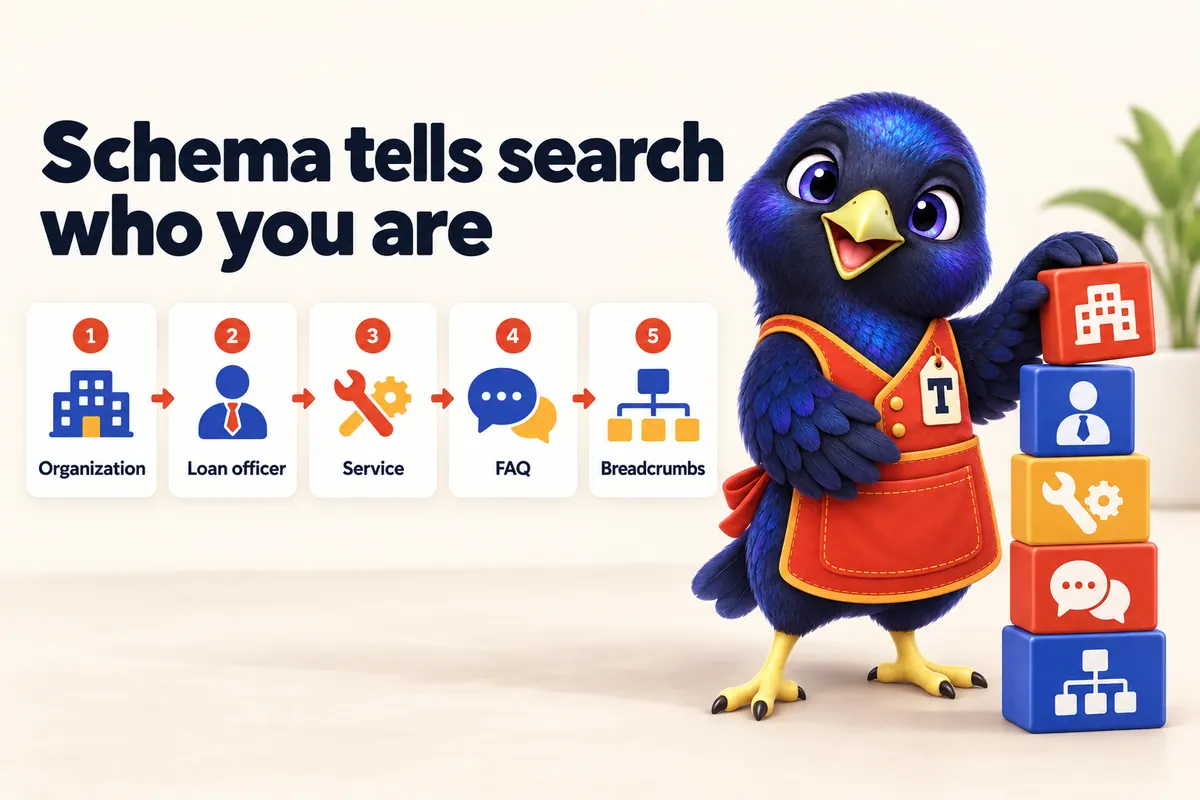
Infographic: Schema tells search who you are. 1: Organization. 2: Loan officer. 3: Service. 4: FAQ. 5: Breadcrumbs. With Trove the bowerbird mascot.

Definition

What is Schema markup (JSON-LD)?

Schema markup is structured data, usually written as JSON-LD, that describes a page's content using the shared schema.org vocabulary: organizations, people, services, FAQs, articles and breadcrumbs. Search engines use it to understand pages and to enable some rich results.

What schema does a loan officer site need?

An Organization (or FinancialService) for the company, a Person for each loan officer, Service for programs and offerings, FAQPage for visible questions, BreadcrumbList for navigation, Article or BlogPosting for posts, and WebSite with a search action.


Why generate schema instead of typing it?

Hand-typed schema drifts out of date: a phone number changes on the page but not in the markup. Generating it from the same data that renders the page keeps them identical, which is also what Google's guidelines require.

Does schema guarantee rich results?

No. Schema makes a page eligible for some rich results and helps understanding, but Google decides what to show. Markup must also describe only content that is visible on the page.

Example: schema for a loan officer site

{
  "@context": "https://schema.org",
  "@graph": [
    {
      "@type": "FinancialService",
      "@id": "https://example-lo.com/#org",
      "name": "Example Home Loans",
      "url": "https://example-lo.com/",
      "areaServed": [
        "TX",
        "OK"
      ],
      "identifier": {
        "@type": "PropertyValue",
        "propertyID": "NMLS",
        "value": "0000000"
      }
    },
    {
      "@type": "Person",
      "@id": "https://example-lo.com/about/#person",
      "name": "Jordan Example",
      "jobTitle": "Loan Officer",
      "worksFor": {
        "@id": "https://example-lo.com/#org"
      },
      "identifier": {
        "@type": "PropertyValue",
        "propertyID": "NMLS",
        "value": "0000000"
      }
    },
    {
      "@type": "Service",
      "name": "FHA loans",
      "provider": {
        "@id": "https://example-lo.com/#org"
      },
      "serviceType": "Mortgage lending"
    }
  ]
}

Simplified. Fictional names and placeholder NMLS numbers. Real output also links breadcrumbs, FAQs and pages through @id references.

Schema by page type

PageTypes
HomeOrganization, WebSite, Service
About / profileAboutPage, Person
Program pageService, FAQPage, BreadcrumbList
Blog postBlogPosting, Person, FAQPage
ContactContactPage, ContactPoint

Guidelines: Google Search Central, structured data.

DIY builder vs agency vs Mortgage Website Shop

Schema markupDIY builderTypical agencyMortgage Website Shop
Organization and Person schemaPluginSometimesEvery site
FAQPage from visible FAQsPluginSometimesEvery significant page
@graph with @id linksRareRareAlways
Generated from one data sourceNoRarelyYes

General comparison based on how these options typically work; individual builders and agencies vary. See our dated, sourced comparisons.

Help desk

Schema markup: what loan officers ask

01What is JSON-LD?

JSON-LD is the format Google recommends for structured data: a small script block in the page that describes it, separate from the visible HTML.

02Is there a mortgage-specific schema type?

Schema.org has FinancialService (a type of LocalBusiness) and LoanOrCredit types. We use what fits your business and only what is visible on the page.

03Will schema show my reviews as stars in Google?

Only genuine, on-page reviews may be marked up, and Google limits self-serving review stars for businesses. We never mark up sample or invented reviews.

04Do you validate the schema?

Yes. Every build is checked, and we test key pages with Schema.org validation and Google's Rich Results Test before launch.

05Can schema hurt my site?

Misleading or invisible-content markup can lead to manual actions. Accurate markup generated from visible content is safe.

06Does schema help AI assistants?

It helps them confirm who is behind the content and how entities relate, which supports accurate citation.

07Do blog posts get schema?

Yes: BlogPosting with the author (Person), publisher (Organization), dates, breadcrumbs and FAQPage when the post has FAQs.

08Can I see the schema on this site?

Yes. View the source of any page and look for the application/ld+json block. The example below is the kind we generate for a loan officer.

Built this way from day one.

Every design in the shop ships with this foundation. You bring your name and market; we bring the plumbing.

Browse designsBuild my site